Hearing Loss

About Hearing Loss

How We Hear

The ear has three main parts or sections - the outer ear, middle ear and inner ear. Each section has a specific function that allows sound waves that enter the ear to be transformed into electrical impulses that the brain can understand. The outer ear collects sound waves and directs them to the middle ear. The middle ear then amplifies the sound and transmits it to the inner ear. The inner ear converts the sound vibrations into electrical impulses that travel along the auditory nerve to the brain.
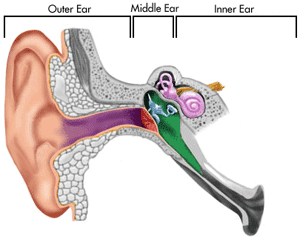
  • The outer ear catches sound waves and directs them into the ear canal.
  • The ear canal carries the sound waves to the eardrum (tympanic membrane).
  • Sound waves cause the eardrum (tympanic membrane) to vibrate.
  • The bones in the middle ear (malleus, incus and stapes) pick up these vibrations.
  • Vibrations pass through the oval window to the cochlea, setting the fluid inside in motion. This causes special nerve cells to turn the sound waves into electrical impulses.
  • The auditory nerve sends these electrical impulses to the brain where they are heard as sound.
  • Types of Hearing Loss

    When any part of the hearing system is unable to function, the result is hearing loss. There are several types of hearing loss:

    How We Hear

    The ear has three main parts or sections - the outer ear, middle ear and inner ear. Each section has a specific function that allows sound waves that enter the ear to be transformed into electrical impulses that the brain can understand. The outer ear collects sound waves and directs them to the middle ear. The middle ear then amplifies the sound and transmits it to the inner ear. The inner ear converts the sound vibrations into electrical impulses that travel along the auditory nerve to the brain.
    Signs/symptoms may include:
  • The outer ear catches sound waves and directs them into the ear canal.
  • The ear canal carries the sound waves to the eardrum (tympanic membrane).
  • Sound waves cause the eardrum (tympanic membrane) to vibrate.
  • The bones in the middle ear (malleus, incus and stapes) pick up these vibrations.
  • Vibrations pass through the oval window to the cochlea, setting the fluid inside in motion. This causes special nerve cells to turn the sound waves into electrical impulses.
  • The auditory nerve sends these electrical impulses to the brain where they are heard as sound.
  • Sensorineural hearing loss

    Sensorineural hearing loss is caused by damage to the inner ear. Sound waves travel normally through the outer and middle ear, however, the inner ear is unable to pick up the vibrations or is unable to send the vibrations to the brain. Also called "nerve deafness", it usually occurs in both ears. A sensorineural loss can result from infection, disease, certain drugs, excessive noise, birth defects and aging.
    Signs/symptoms may include:
  • Perceiving speech and other sounds as distorted or unclear
  • Difficulty hearing certain pitches (usually high pitches)
  • Hearing a ringing or buzzing sound that is constant or periodic
  • Difficulty understanding speech in the presence of background noise
  • Mixed hearing loss

    Mixed hearing loss is caused by damage to the outer/middle ear and the inner ear. Typically, sound waves are not conducted efficiently to the inner ear, and once they reach the inner ear the vibrations cannot be picked up or sent to the brain. Therefore, a mixed hearing loss is the combination of a conductive and sensorineural hearing loss.
    Signs/symptoms may include:
  • See "Signs/Symptoms" under Conductive hearing loss & Sensorineural hearing loss.
  • Central hearing loss

    Central hearing loss is caused by damage to the auditory nerve or hearing centers. Sound waves are transmitted normally through all three parts of the ear, however, the auditory nerve may not be able to send the electrical impulses to the brain or the hearing centers of the brain may not receive the signals correctly. A Central loss can result from head injuries, disease or tumors.
    Signs/symptoms may include:
  • Detecting sound but not being able to understand or process it.